Project Moonshot EDU: Accelerating Learning with the T3 Framework for Innovation
Dr. Anthony J. Magana III EdD
Magana Education, USA
COVID-19 has wreaked havoc on learning and wellbeing globally. Exceptional measures are needed to get students back on track after a catastrophic epoch for education (United Nations Education Report, 2021). To meet this extraordinary challenge, today’s teachers and leaders must implement breakthrough teaching methods that have been shown to reliably accelerate student learning. The T3 Framework for Innovation is a next-generation pedagogy that was synthesized from 4 decades of pioneering research by Dr. Sonny Magana. Compounding, peer-reviewed research shows that the T3 Framework strategies have an effect size of 1.6 and higher—which is equivalent to quadrupling student learning productivity. The T3 Framework for Innovation was recently inducted into the prestigious Oxford University Research Encyclopedia of Education. In this interactive keynote session, Dr. Magana will share how the T3 Framework provides a blueprint for reversing the “Pandemic Slide Effect” and realizing the Project Moonshot EDU goal of accelerating wellbeing and learning productivity.
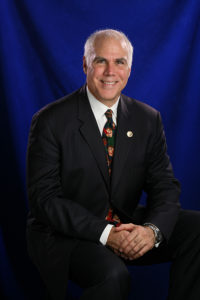 Dr. Anthony J. “Sonny” Magana III is a digital age learning pioneer. In 1995 Sonny created and served as principal of Washington State’s first CyberSchool—which is still serving the needs of at-risk students. He is an Oxford Research Scholar, award-winning teacher, and best-selling author. Dr. Magana’s first book, Enhancing the Art and Science of Teaching with Technology has become a modern classic. In next book, Disruptive Classroom Technologies, he introduced the T3 Framework as a next generation learning model for a new era. Synthesized from four decades of pioneering research, the T3 strategies were shown to reliably accelerate learning productivity and have been called: “A brilliant breakthrough in our understanding and use of technology for learning,” by Professor Michael Fullan “A visionary work that is insightful and inspirational,” by Dr. Robert Marzano; and “A major step forward! Dr. Magana’s T3 Challenge is credible, powerful, and exciting; let’s do it!” by Professor John Hattie. His highly anticipated upcoming book, Learning in the Zone: The 7 Habits of Meta-Learners will be released in the Spring of 2022.
The Importance of Empathy in Higher Education Settings
Prof. Dr. Yehuda Bar Shalom
Chair, M.A in Educational Counseling Program, Ramat Gan Academic College, Israel
In his keynote, Bar Shalom will discuss the importance of empathy in all higher education settings. Empathy is needed if we believe that Higher Education can be a potential setting for personal, interpersonal and communal transformation. Drawing from his research and experience with transformational leadership and his involvement with Dr. David Burns’ TEAM CBT approach to counseling and therapy, Bar Shalom will introduce the 5 secrets of effective communication which can have a beneficial use in many academic and organizational settings. Participants will be able to use these tools right away, in the social and organizational setting in which they operate.
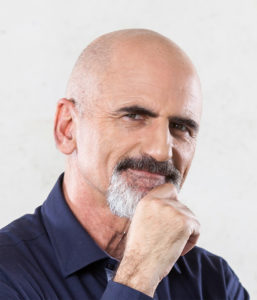 Prof. Yehuda Bar Shalom, educator, counselor and researcher, has served as president/rector of Hebraica University in Mexico City, the only Jewish University in Latin America. Currently he serves as director of the M.A. Program in Counseling at the Ramat Gan Academic College in Israel. Bar Shalom has conducted numerous research projects on Education, Social Entrepreneurship, and the interface between education, counseling and psychotherapy. He has authored numerous books and articles, among them Educating Israel: Educational Entrepreneurship in Israel’s multicultural society which was published by Palgrave Mcmillan in 2006. This book analyses best practices in education in Israel. Other books that examine holistic approaches to Social Entrepreneurship with emphasis on empathy are Change by doing (2011) with Amiram Sarel, and With the and for them (2015) with Edna Greene.
 In the last decade Bar Shalom has become very passionate about Counseling, mostly from CBT approaches. During his service as President and rector of Hebraica University in Mexico, he introduced Dr. David Burns’ integrative approach to therapy, TEAM CBT, in Latin America. Bar Shalom is a trainer in that particular style.
Multiple Configurations for Higher Education as a Result of the Covid Era
Gordon Freedman
National Laboratory for Education Transformation, USA
Higher education and the secondary education and training associated with higher education experienced a massive Covid-related shock and relocation to remote learning worldwide. This inauspicious event did not simply pause higher education organization and processes, it permanently disrupted them. The global pandemic also intersected with a global push for diversity, inclusion and equity in education practices and responsibility. As result, the world of education, training and access to education has changed not into one new thing, or back to the old, but into a variety of multiple modes of education. Also, the connection between education and equal access to education has led to deeper connections to employment outcomes, something many higher education institutions do not track or enable very well. The new world of multiple configurations and multiple objectives is underway. This talk will discuss these events in the U.S. and also globally.
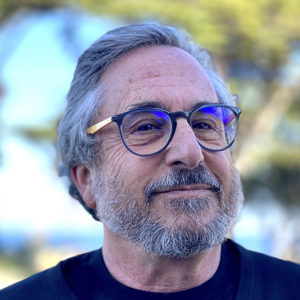 Gordon Freedman is the Founder and Vice Chair of the National Laboratory for Education Transformation (
Recommendations for Working with the ISO-strategy – School Development in the Balance of Innovation, Sustainability, and Optimization
Prof. Dr. Stephan Huber
Head of Research and Development, and Head of the Institute for the Management and Economics of Education, University of Teacher Education, Switzerland.
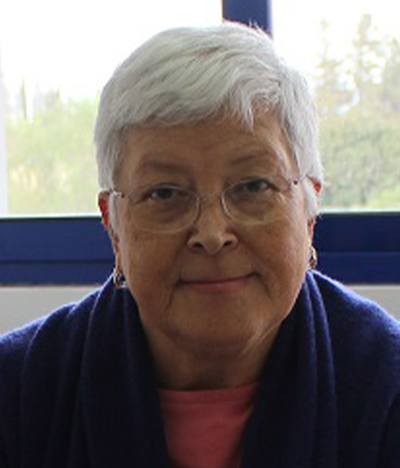
The Role of Intelligence in the Formation of Innovation
Prof. Dr. Ayşegül ATAMAN
In this keynote, “The Role of Intelligence in the Formation of Innovation”, The keynote speaker will address a number of related topics, including: The cognitive structure of the human being; the definition and the infrastructure of innovation, the realtionship between giftedness, and innovation; the required teaching/ learning environment to promote innovation amongst the gifted students; and o shed light on the best current practices.
 Prof. Dr. Ayşegül ATAMAN graduated from Special Education and School Psychology and Counselling Departments in 1969. Combining her general knowledge in the field of special education with her knowledge of school psychology and guidance, ATAMAN turned to the field of gifted people during her master’s degree. She became a pioneer in this field in Turkey with her doctoral thesis titled “Educational Problems of Gifted Children: A Research in Ankara Science High School”, which she completed in 1976. ATAMAN, who worked as an instructor at Ankara University Faculty of Education, Special Education Department between 1970-1984, became an associate professor in 1983. She transferred to Gazi University in 1986. She served as the Head of the Department of Educational Sciences in the academic year of 1986-87 and founded the Department of Special Education Teaching at the same time. During the same period, she conducted field studies and visiting lecturer in England and the USA. Ataman continued her duty as the Founder and Director of Gazi University, Institute of Educational Sciences in 1992-1993 academic year, and served as the Dean of Gazi Education Faculty between 1992-1995. Between 1998-2004, Gazi Education Faculty Special Education Department, Visually Impaired Continuing her duty as the Head of the Education Department, ATAMAN was founded in 2005. She was the founder and director of the Education Center for Children with Learning Disabilities (GÖYÇEM). ATAMAN, who has dozens of books in the fields of special education, educational sciences and psychology, has also edited many books. ATAMAN, which has dozens of articles, papers and research projects in the same fields since the 1970s, has organized panels, conferences, etc. to inform the public in recent years. oriented to activities. ATAMAN, who retired from Gazi University in April 2013, established AADEM in Ankara and started to provide consultancy and training services for gifted children, especially gifted children, and their families. Again in the same year, she founded the Special Education Department and the ÖÇEM center at the European University of Lefke and continues her duty as the head of the special education department. ATAMAN, who received many awards throughout her career, was awarded the Head Teacher Honor Award by the Anatolian Education Syndicate in 2017 and finally the Science Award by the Gaziantep Young Businessmen Association in 2021.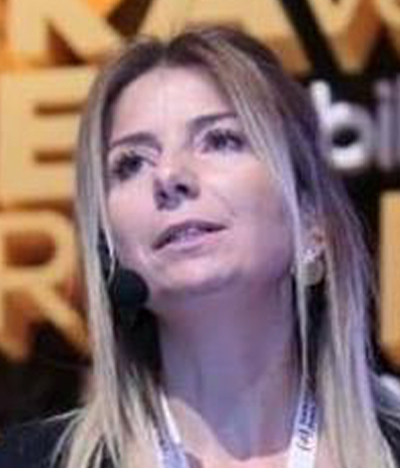
Reflectıons of Specıal Talent Students’ Social Emotional Problems in the Classroom and Intervention Methods
Dr. Ayça Köksal Konik
İstanbul Üniversitesi, Republic of Türkiye
Gifted students have different needs in the social-emotional field, as in many other fields. In order to meet these needs of gifted students, their feelings; recognition, management and regulation skills should be gained during the school process. Teachers are the people who will provide the greatest support in this regard. Because the only duty of teachers is not to support their students academically, but also to meet their needs in the field of social emotional development. According to Ben-Horin (2004), the skills of a good teacher are considered in two categories…
 Dr. Ayça Köksal Konik graduated from Istanbul University, Hasan Ali Yücel Faculty of Education, Department of Psychological Counseling and Guidance. (Phd) she received the title. In 2002, he started his academic life as a research assistant in Istanbul University Special Education Department, Gifted Education Department. Currently in the same department, Dr. She continues to work as a faculty member. Ayça Köksal Konik is a certified Family and Couple Therapist and Play Therapist. She also carries out clinical studies with children and adolescents, especially gifted children and their families, by completing certification and supervision studies of different therapy schools. Her special fields of study are “psychology of gifted children, their social/emotional problems, their families’ counseling needs”. She gives lectures on the fields of study in the Education of the Gifted Undergraduate and Graduate programs she. She also continues to contribute to the field with her thesis studies and articles she supervises.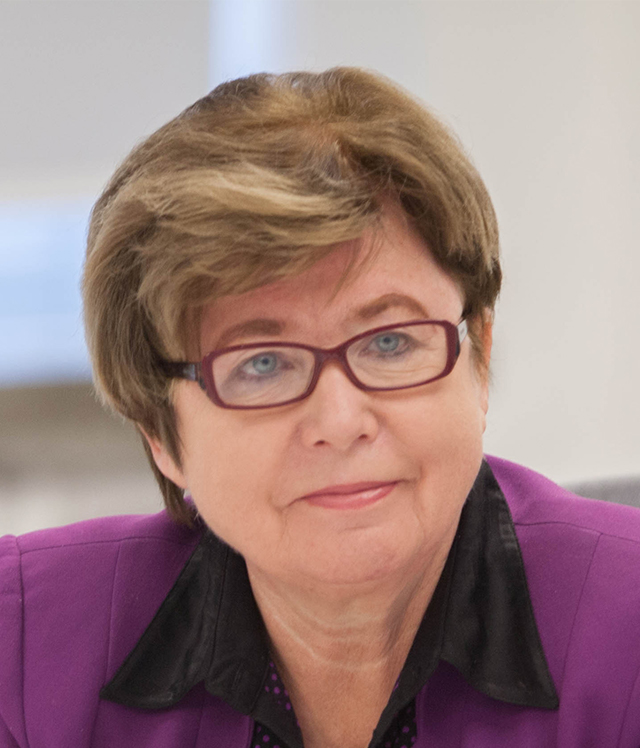
Programmes for Continuous Professional Development and Lifelong Learning
Danguole Rutkauskiene
President, National Association of Distance Education
Abstract coming soon…
 Danguole Rutkauskiene is an Associate Professor at the Department of Multimedia Engineering (Faculty of Informatics) at Kaunas University of Technology in Lithuania. She was a founder member of the National Association of Distance Education in Lithuania and currently is its President. Danguole Rutkauskiene is a member of the Management Committee of EADTU (European Association of Distance Teaching Universities), member of National Digital Coalition, member of INFOBALT and other associations. She has been involved as a coordinator and partner in numerous national and international projects (148). She is the author and co-author of 36 books, and monographs and 243 articles on the theme of e-learning. She has a particular interest in e-learning methodology, management and the use of advance learning technologies in universities and educational institutions. Recently, she has a big interest in MOOCs and actively participates in the researches of MOOCs in national and international levels.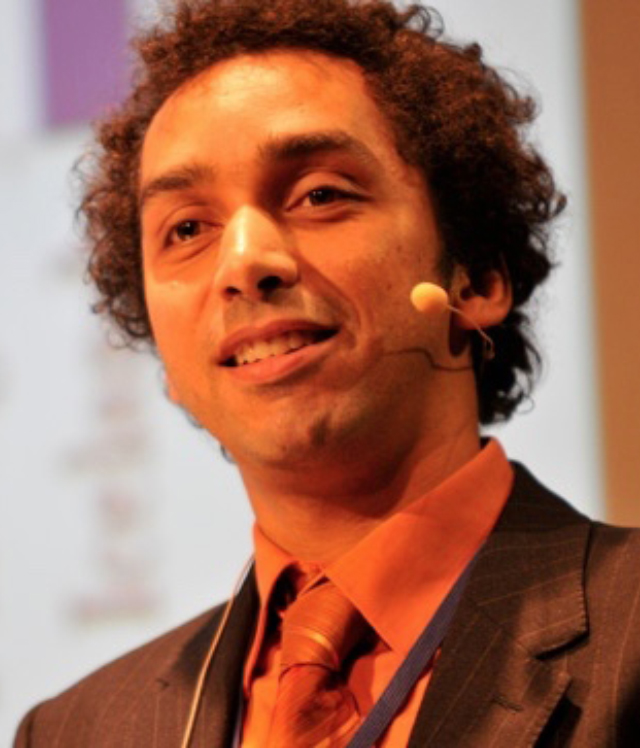
Supporting Innovation in Basic-Higher Education
Stéphan Vincent-Lancrin
Deputy Head of the Centre for Educational Research and Innovation (CERI) Organisation for Economic Co-operation and Development (OECD), Paris-France
Abstract coming soon…